A Labrador puppy that looks adorable at eight weeks can feel very different at five months when he is pulling toward every leaf, shoe, and squirrel in sight. That is why so many families specifically search for labrador puppies for obedience training instead of choosing based on color alone. They want a puppy with the right mind, stable temperament, and natural willingness to learn from the very beginning.
For most homes, obedience is not about producing a competition dog. It is about raising a Labrador that can settle in the house, walk politely, come when called, greet children well, and grow into a dependable family companion. Those goals are much easier to reach when the puppy comes from thoughtful breeding, early socialization, and parents known for intelligence and trainable temperaments.
Why Labrador puppies for obedience training stand out
Labrador Retrievers have earned their reputation for a reason. A well-bred Lab is typically eager to please, people-focused, and responsive to guidance. Those qualities matter in obedience training because a puppy that wants to engage with people is usually easier to motivate and easier to redirect.
That does not mean every Labrador is identical. Some puppies are softer and more naturally attentive. Others are more energetic, more independent, or more driven by movement and excitement. This is where breeder quality matters. Strong obedience potential starts long before a puppy goes home. It begins with selecting parents that combine sound temperament, intelligence, and steady nerves with the classic Labrador friendliness families love.
For buyers who want more than a casual pet, pedigree also plays a role. Champion bloodlines can reflect generations of intentional breeding for structure, temperament, and working ability. While a title alone does not guarantee a perfect puppy, it often signals that the dogs behind the litter were bred with purpose rather than convenience.
What makes a Labrador easier to train
When families ask whether Labs are easy to train, the honest answer is yes, but with a condition. They are easy to train when their energy, social needs, and consistency are handled well. Even the smartest Labrador puppy can become unruly without structure.
A promising obedience puppy often shows early signs such as checking in with people, recovering quickly from new experiences, and responding well to praise or food rewards. Confidence matters too. A puppy that is overly timid may need a gentler pace. A puppy that is extremely bold may need more impulse control work from day one.
This is one reason early raising practices are so important. Puppies raised in a family setting, with regular handling and age-appropriate exposure, often arrive in their new homes more ready to learn. They have already begun adapting to human routines, sounds, touch, and simple boundaries. That foundation can make the first weeks of obedience training smoother for first-time owners and experienced handlers alike.
How breeding affects obedience potential
It is easy to focus only on what happens after pickup day, but obedience potential is shaped by breeding choices just as much as by training methods. Health, temperament, and mental steadiness all matter.
A puppy with strong genetic health backing has a better chance of growing into a dog that can comfortably participate in training, exercise, and family life. Issues involving hips, elbows, eyes, or inherited conditions can affect long-term performance and quality of life. Families looking for a Labrador with obedience potential should value health certifications and genetic screening, not as marketing extras, but as part of responsible breeding.
Temperament is just as important. Stable parents often produce puppies that can handle new environments with more confidence. That matters in obedience, where the dog must learn in the home, in the yard, around guests, and eventually in busier settings. A puppy that has inherited a sound, balanced nature is usually easier to bring along in a calm and positive way.
At Laura Martin’s Labrador, that combination of family raising, health focus, and champion lineage speaks directly to what many buyers want – a beautiful Labrador with the mind and temperament to become a true partner in the home and beyond.
Choosing the right puppy for your goals
Not every family needs the highest-drive puppy in the litter. In fact, many do better with a middle-of-the-road temperament. If your goal is a trustworthy family dog that learns obedience well, the best puppy is often one that is social, curious, and responsive without being overly intense.
This is where honest breeder guidance makes a difference. A good breeder spends enough time with the litter to notice who is bold, who is easygoing, who recovers quickly, and who naturally seeks human interaction. That kind of insight helps match the right puppy to the right household.
For a family with children, a puppy that balances playfulness with a softer, people-oriented nature may be ideal. For a buyer interested in rally, advanced obedience, or hunt test work, a slightly more driven puppy may be a better fit. Neither is automatically better. It depends on your home, your schedule, and how much training you plan to do.
The first obedience lessons start at home
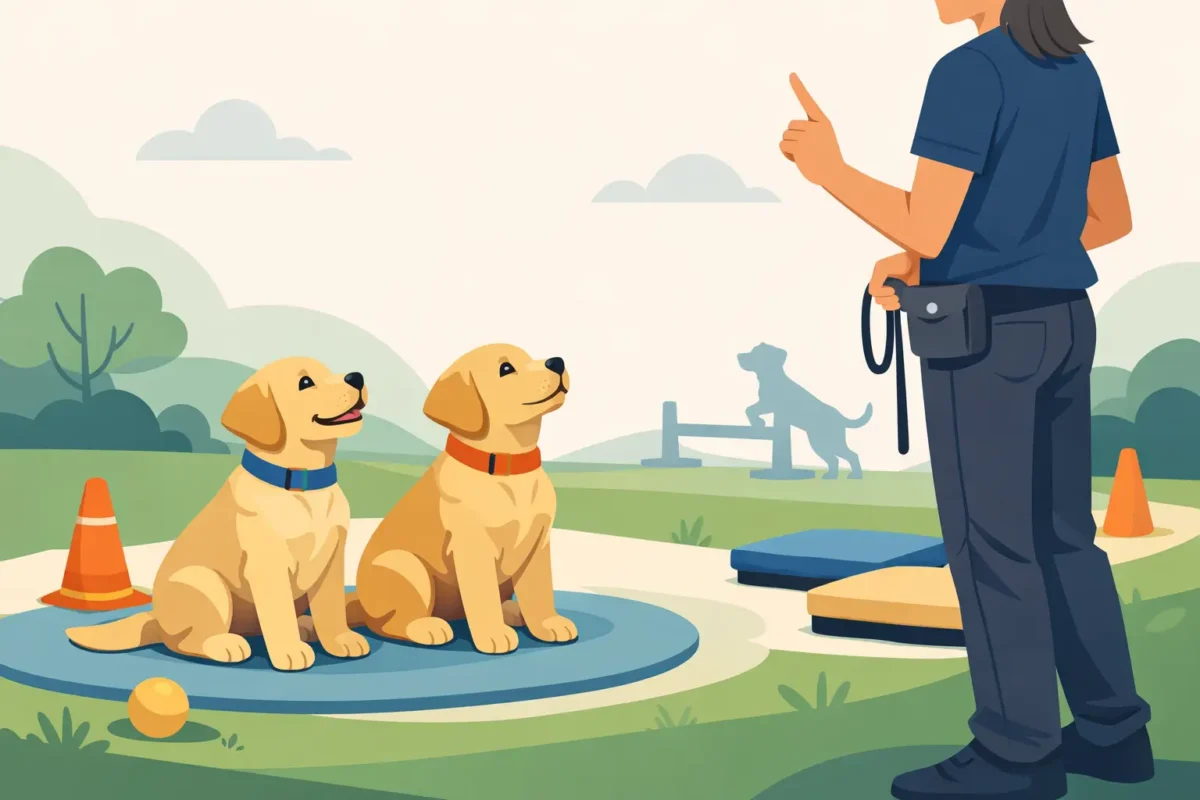
Once your puppy comes home, training should begin right away, but that does not mean expecting too much too soon. Young Labrador puppies learn best through short, positive sessions. Their attention span is limited, but their habits are forming quickly.
The first lessons are simple. Teach your puppy that paying attention to you is rewarding. Start with name recognition, coming when called from a short distance, sitting for food or attention, and settling in the crate. These are not flashy skills, but they shape daily life more than any advanced command ever will.
Consistency matters more than intensity. If the puppy is allowed to jump on guests sometimes, pull toward the door sometimes, or ignore a cue when distracted, those mixed messages slow progress. Labradors are smart, and they notice patterns fast. The good news is that they also respond beautifully when expectations are clear and fair.
Common training mistakes with Labrador puppies
One of the biggest mistakes owners make is confusing excitement with disobedience. Labrador puppies are naturally enthusiastic. They may grab the leash, bounce during greetings, or act distracted outdoors. That does not mean they are poor candidates for obedience. It usually means they need patient repetition and enough exercise for their age.
Another mistake is moving too quickly into high-distraction situations. A puppy that can sit in the kitchen may not be ready to sit calmly at a soccer game or pet store parking lot. Training should build in layers. Start in quiet spaces, then gradually add more challenge.
Some owners also rely too much on correction and not enough on guidance. Labs tend to thrive when training feels rewarding and interactive. Firm structure is helpful, but harsh handling can reduce confidence or create unnecessary stress. The goal is a dog that wants to work with you, not one that obeys only when pressured.
Why socialization supports obedience
Socialization and obedience are closely connected. A puppy that has seen different surfaces, heard household noises, met kind people, and experienced new settings in a calm way is often easier to train because he is less overwhelmed by the world.
That is especially important for families buying from out of state or receiving a shipped puppy. They want reassurance that the puppy has not been raised in isolation. Early social experiences can help a puppy transition better into a new home and respond more confidently to training.
Good socialization is not chaos. It is thoughtful exposure. The goal is not to flood a puppy with every possible experience in one week. The goal is to build trust and resilience so the puppy can stay connected to his owner even when life gets busy.
A good start makes lifelong training easier
The truth about obedience is simple. Training success is not just about the owner being strict enough or the dog being smart enough. It is about starting with a Labrador that has been bred and raised with care.
Families looking for labrador puppies for obedience training should look beyond photos and quick promises. Ask about health testing, temperament, socialization, lineage, and how the puppies are raised before they ever leave for their new homes. Those details shape the dog you will live with for years.
A Labrador with the right foundation can grow into much more than a pet that knows a few commands. He can become the kind of dog who fits naturally into family life, travels well, learns with joy, and makes you proud in everyday moments. Start with the right puppy, stay consistent, and give that young Lab clear guidance. You may be surprised by just how much a well-bred Labrador is ready to give back.
